
Chasing the outdoors with Sidney Smith
June 12, 2026
Sidney Smith is an avid outdoorsman. Whether he’s ice fishing in freezing temperatures, exploring local lakes on his kayak or gearing up to hunt, there’s no shortage of adventure in Sidney’s life.
Growing up, Sidney spent a lot of his time outdoors. His dad would take him on hunting trips, and his family vacations often came in the form of a night spent under the stars. But unlike other kids, doing some of his favorite activities proved more challenging for him.
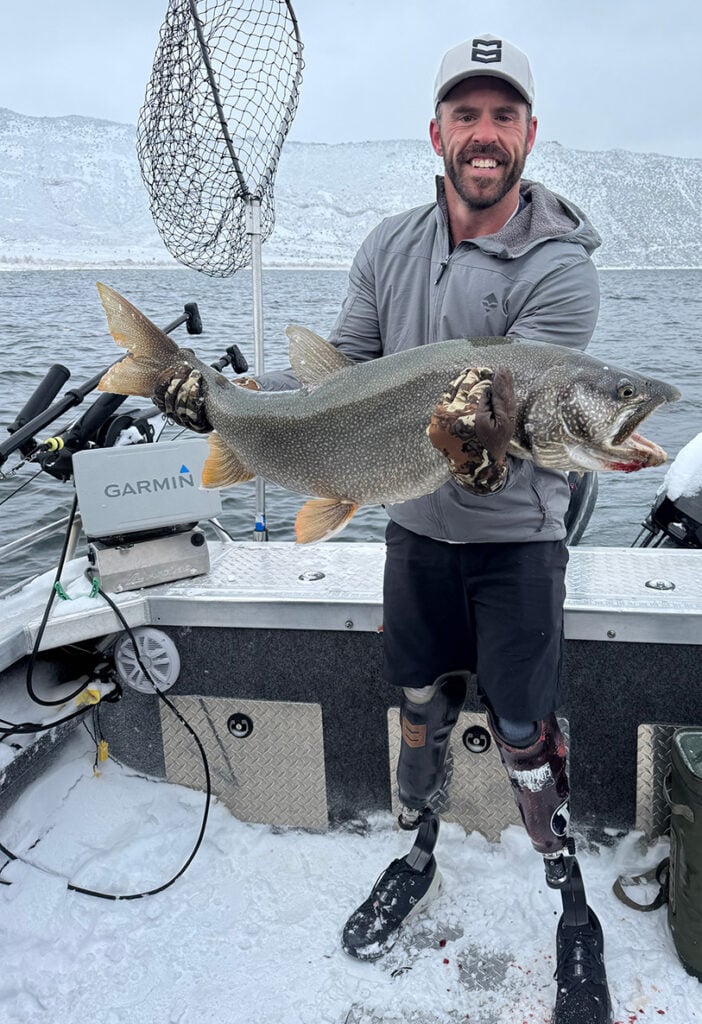
When Sidney was in the 5th grade, he was diagnosed with Charcot-Marie-Tooth, a genetic disorder that would lead to a double amputation of both his legs at 32.
“I started developing a kind of muscular dystrophy inside my legs from the knee down,” Sidney said. “Trying to play sports was harder. Recess, hiking, going hunting, those kinds of things became harder as a kid.”
The disease caused his feet to disfigure, which led to leg braces. In 2015, the disease had developed to the point where amputation was needed.
“I did the left foot first because my house is a little older and I didn’t have wide enough doors for a wheelchair,” Sidney said. “Plus, I wanted to get to work. I still had a job, and I wasn’t on disability or anything like that.”
Quickly after the amputation, his left leg became infected, and doctors needed to amputate even more of his leg. Sidney was demoralized.
“I went through a series of frustrations, depressions and fear,” Sidney said. “I had a job I had to get back to. This was very much a financial burden for me and my family.”
Aware that his right leg would also eventually need to be amputated, Sidney decided to avoid a third surgery and opted to have both legs removed at the same time. By the end of the year, he became both a single and double amputee.
Training for a triathlon
As Sidney started the healing and recovery process, a new interest sparked.
“I was watching TV and a long-distance triathlon was on,” Sidney said. “I just thought it was amazing, and I was telling people that I was going to do one.”
Committed to learning how to walk and bike with prosthetics and swim without them, Sidney competed in a series of small triathlons and half-distance triathlons before competing in his first full triathlon in 2019.
To his surprise, growing up with braces helped him adapt to the pain of his new prosthetics much quicker.
“I was able to push through it because of living with the pain with my disease,” Sidney said. “Pain just became a friend of mine, and I recognized it, so it wasn’t something foreign to me.”
Throughout Sidney’s training, he used a plethora of Garmin products to help him reach the finish line. He began his training with a Garmin Forerunner® triathlete smartwatch. By race day, he had upgraded to a fēnix® 7 multisport GPS watch and Garmin heart rate monitor – a crucial component to his training.
“I had a coach that gave me a plan and instead of tracking distance, I kept at a certain heart rate and RPM for a period of time,” Sidney said. “I was able to track it all on my watch.”
Plus, Sidney said he was able to keep his pace when swimming in open water with his Garmin smartwatch.
On the hunt
As Sidney’s gotten older, his love for hunting has grown. Sidney now runs Disabled Outdoorsmen Utah, a nonprofit dedicated to providing experiences for other outdoorsmen with disabilities.
“It wasn’t until after I lost my legs that I became more obsessed with it, and it became more of a lifestyle,” Sidney said.
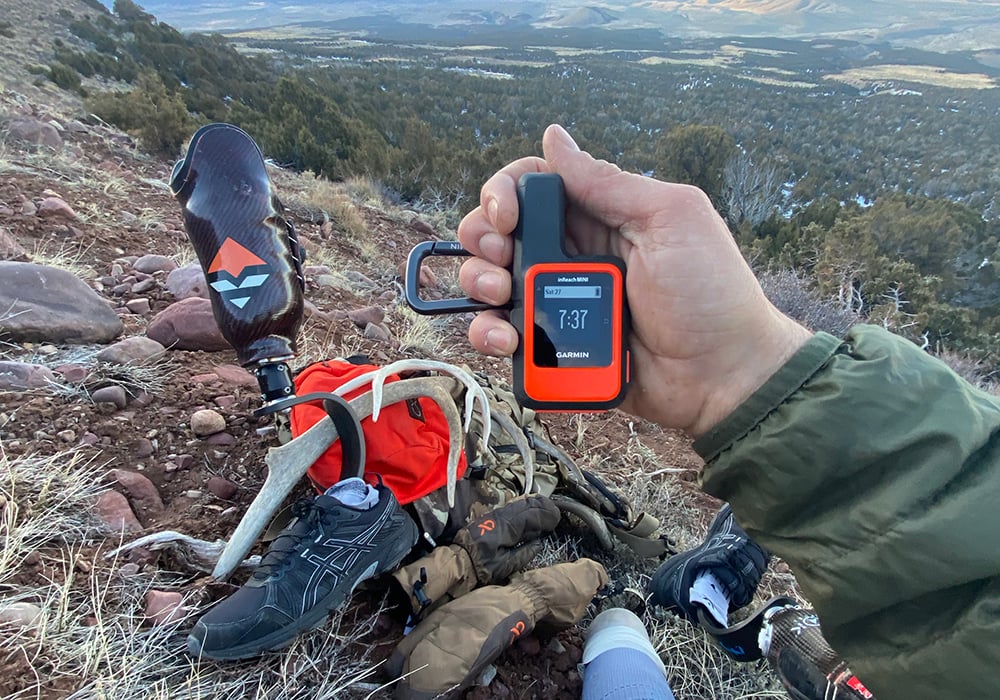
When preparing for a hunting trip, Sidney makes sure to strap on various Garmin devices. Hiking rugged terrains can be harsh on his prosthetics, so much so that the pressure of going downhill has caused them to break. Now he keeps a Garmin inReach® satellite communicator1 on his binocular harness so he can get in contact with his hunting buddies and loved ones at home when he doesn’t have cell service.
Although he’s not training for a triathlon in the woods, he also brings along Garmin tactix® 8 — a smartwatch purpose-built to endure intense outdoor excursions. By bringing his smartwatch along, he’s able to tag his favorite spots.
“It’s so much easier to mark waypoints on my watch versus pulling up my phone and tagging it,” Sidney said.
This hunting season, Sidney plans to bring an extra Garmin device along — his Xero® L60i laser rangefinder2.
Beneficial to hunters, Sidney said that the L60i can help hunters find the best path to the animal or shed they have glassed up. Using the visual recall feature, he can hike more direct routes while keeping an eye on his target.
“This is old school, but before when I would locate shed or animal, I didn’t want to lose that spot, so I…