
Why you should dive with the Garmin Descent S1 buoy
July 30, 2026
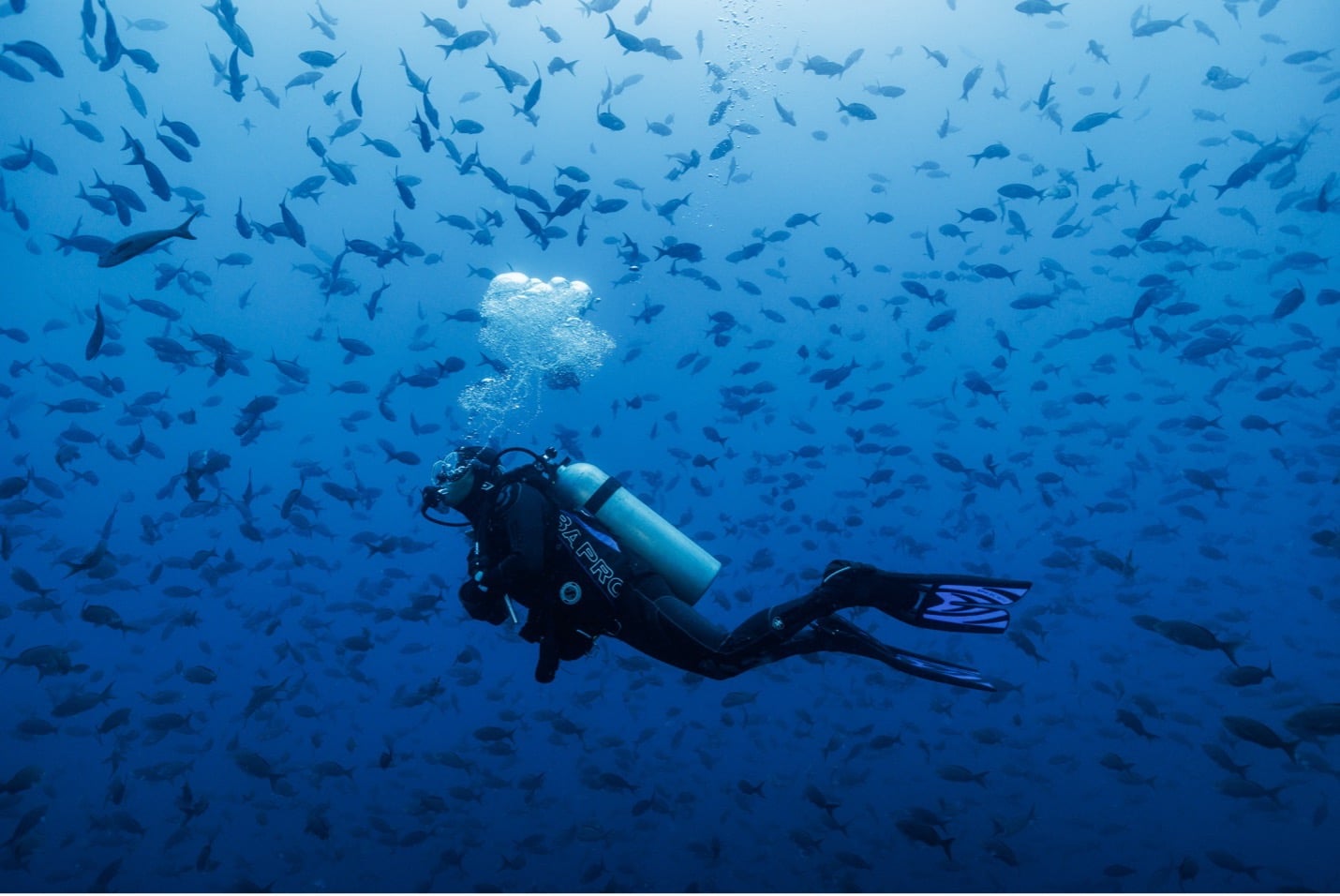
Below the surface, in the nutrient-dense waters of the Galápagos Islands, Justin Packshaw watches as a whale shark nearly the length of a bowling lane swims slowly against the current. If Packshaw reaches out, he could touch it.
Above him, the Garmin Descent™ S1 buoy keeps Packshaw feeling secure and connected to the surface team.
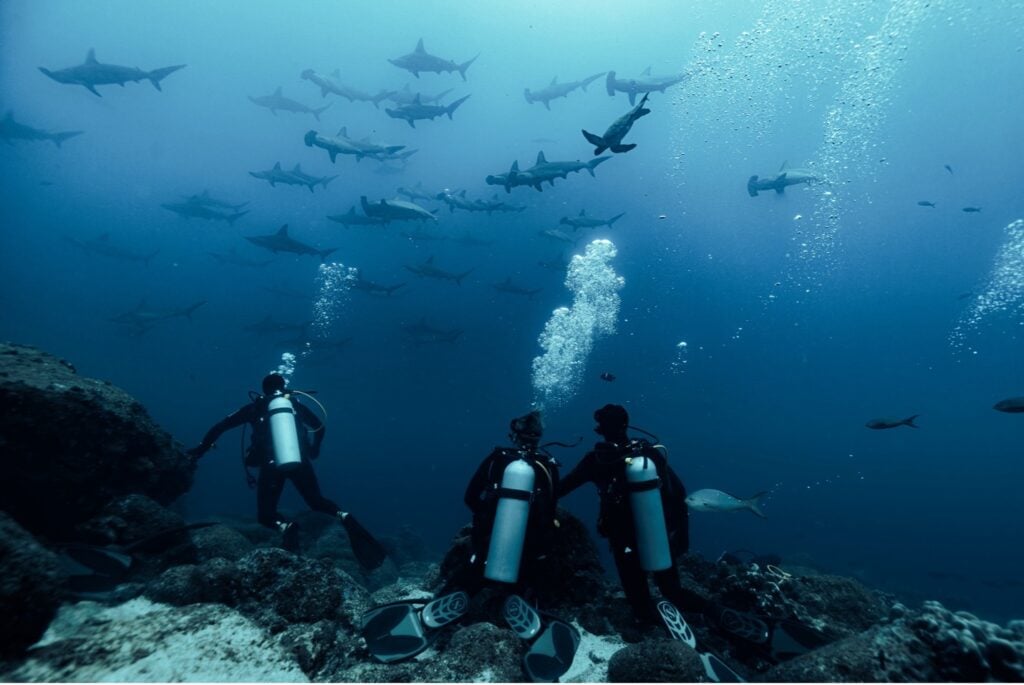
Packshaw, with decades of diving experience ranging from recreational dives to polar expeditions, recently visited the Galápagos Islands as part of a team researching the migration patterns of hammerhead sharks.
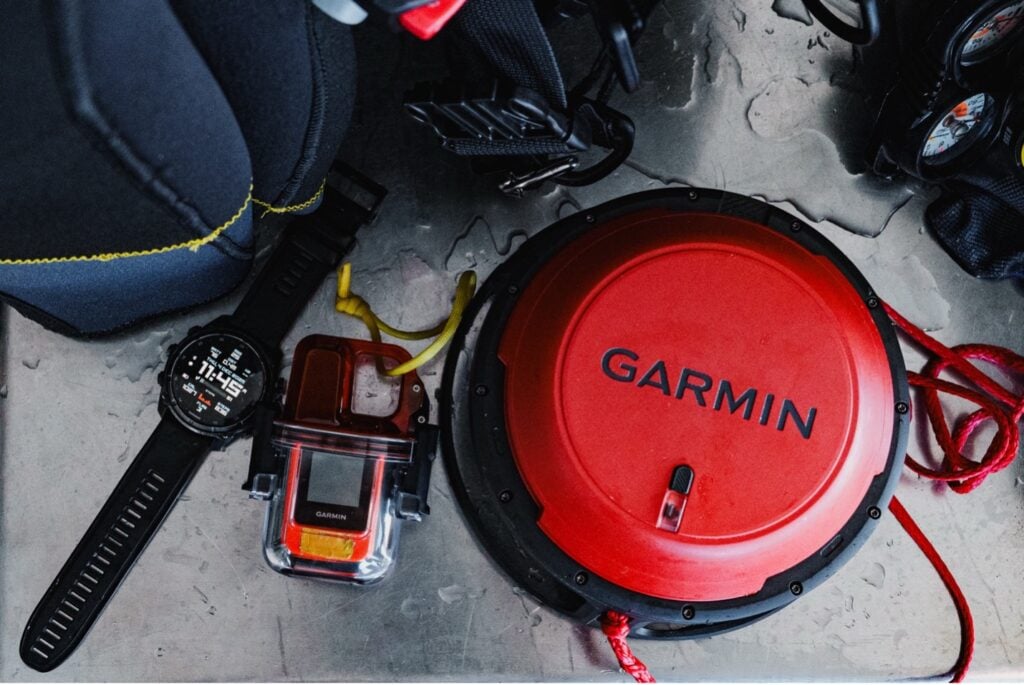
He used the Descent S1 Buoy, along with the Descent™ Mk3i dive computer, Descent™ T2 transceiver and inReach® Mini 2 with a dive case, every step of the way.
“All of it is super useful,” Packshaw said. “It’s very, very smart, it’s easy to use and I think it’s very beneficial.”
Communicate with your dive team through SubWave™ sonar technology
Dealing with the high-current environment and even diving at night, awareness was key for Packshaw and his team.
Through SubWave sonar technology, divers can stay connected to those around them. Here’s how it works: You transmit data from your Garmin dive computer (Descent Mk3i or Descent™ X50i) to the Descent S1 buoy, when paired to a Descent T2 transceiver. That then transfers your data to the Garmin Dive™ app for the topside crew1.
Our SubWave technology on Descent S1 helps the topside crew track diver tank pressure, depth and their approximate locations. Plus, divers can stay connected with crew through preset messages on Garmin dive computers. Those preset messages mean the topside crew can alert divers if there’s a situation they need to know about. And when divers use a connected Descent dive computer, they can tell the surface team where they are, where they’re going, if they need to surface early and their remaining decompression time2.
The Descent S1 buoy also extends the range of diver-to-diver messaging1 up to 100 meters away, compared to 30 meters when divers use only a Descent dive computer and T2 transceiver.
This added awareness helped Packshaw monitor his team, especially when dealing with limited visibility during night dives.
“From a safety perspective, it’s a game changer,” Packshaw said. “Ultimately, it just gives you a feeling of safety knowing that you can be in touch with people.”
Learn from each dive with heatmaps and post-dive data
After dives, Packshaw would review heatmaps of where he explored and examine his dive data.
“The information is extrapolated and goes straight into your Garmin Dive app which then regurgitates that information into something which is palatable for you to understand. That is fantastic,” Packshaw said. “It’s very interesting to dissect and look at what those features are and how they affect your heart rate and your air consumption.”
Navigate with confidence
SubWave technology’s capability of providing the approximate locations of divers helped provide peace of mind to Packshaw, the lead diver. The topside crew could track the approximate range to each diver in the SubWave sonar network, up to 100 meters away from the Descent S1 buoy. Networked divers could also see the distances and directions back to the Descent S1 buoy, providing clear return-to-base references and increased situational awareness1.
Even if Packshaw was dealing with low visibility during a night dive, he could still see where his team was.
“It’s a sort of safety thing and it’s reassuring from a leadership perspective, but it’s also reassuring for everyone else upwards,” Packshaw said.
On the surface, the Descent S1 buoy uses multiple satellite systems to aid signal reception in challenging environments.
In the case that he would need to trigger an SOS and contact 24/7 Garmin Response℠, the inReach® Mini 2 and dive case provided additional peace of mind on the surface.
Garmin devices were key for Packshaw not only on his Galápagos mission, but for the many expeditions he’s taken over the years. He’ll have Garmin at his side during the next one, too.
1Conditions such as surface, waves, chop, objects and diver position can obstruct the signal and reduce range; for more details, visit Garmin.com/subwave
2Some compatible dive computers can receive, but not send, messages. Conditions such as surface, waves, chop, objects and diver position can obstruct the signal and reduce range; for more details, visit Garmin.com/subwave.