
How Garmin Can Help You Prepare for a Natural Disaster
May 1, 2025
You might be missing one thing from your natural disaster emergency kit: a way to get help that doesn’t depend on cell service — aka a satellite communicator.
No matter where you live or what type of natural disasters you may face — from tornadoes to floods to wildfires to hurricanes — you need to be prepared.
There are four basic steps to preparing yourself for a disaster, according to the American Red Cross:
- Get informed.
- Make a plan.
- Build a kit.
- Maintain that kit and plan.
According to the Environmental Protection Agency, you can get informed by asking about the natural disasters specific to your community, learning about community disaster plans and finding out how your community will be warned. For example, the Federal Emergency Management Agency sends free emergency texts; you can also receive alerts from a weather radio.
The plan you build depends on the emergency. Your evacuation plan for a fire, for instance, will be different from your shelter-in-place tornado plan. Regardless, your plan should include a communication plan with family members, a meeting point if you become separated, escape routes and safe places. And don’t forget to include a plan for your pets.
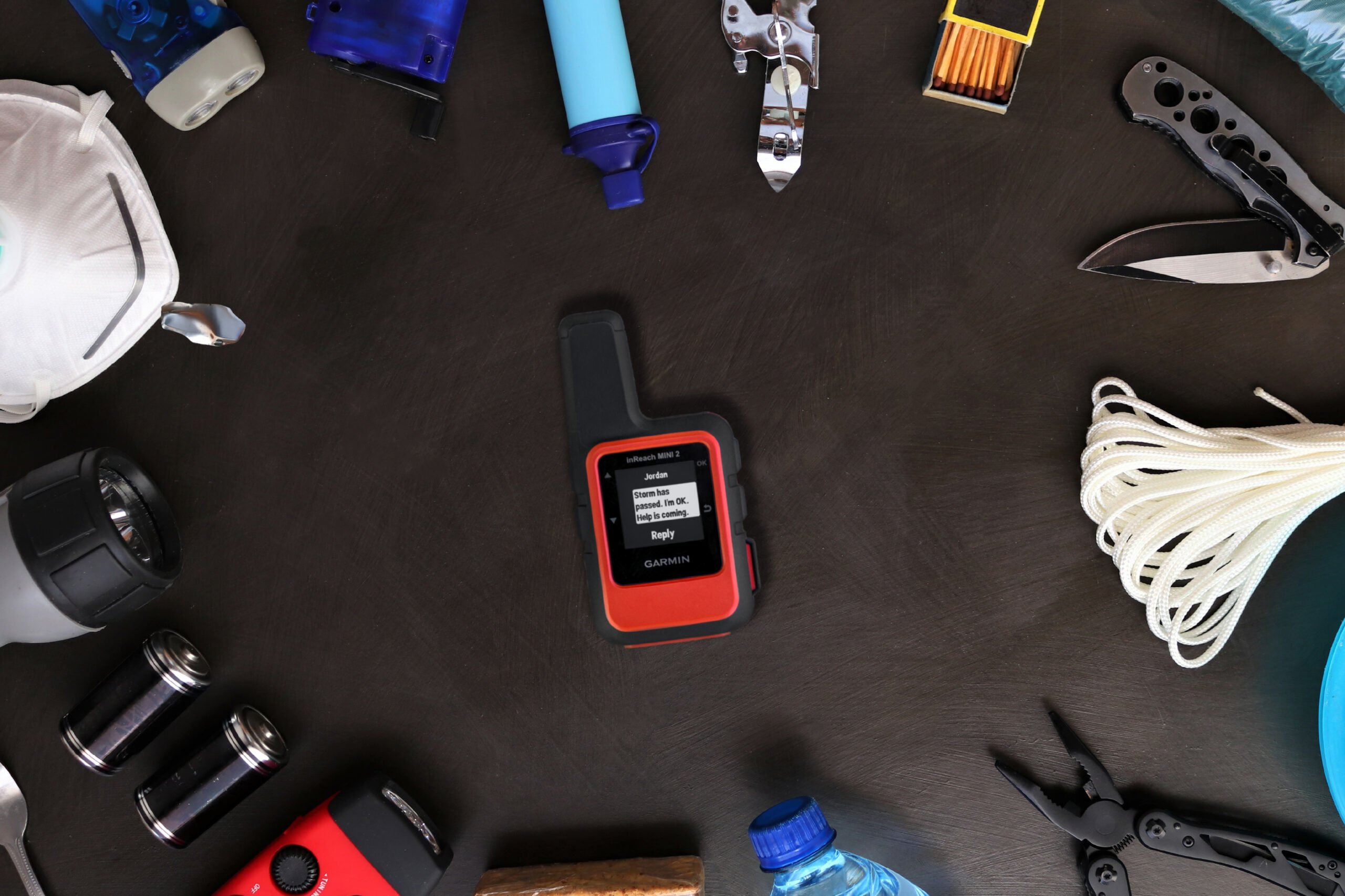
To help ensure you can communicate with loved ones in an emergency, you may want to include a satellite communicator1 such as an inReach®Messenger Plus or inReach Mini 2 satellite communicator. These can help you be prepared if a storm knocks out cell service or power.
You’ll have two-way messaging and be able to trigger an interactive SOS message to Garmin Response℠, our 24/7 international emergency coordination center, that connects you to help if you need it. Other devices, such as a personal locator beacon, may be able to send an SOS alert, but often have limited — if any — abilities to share details of the situation. When you trigger an SOS message to Garmin Response, you’ll be connected to a dedicated team of skilled emergency response coordinators who share critical information with authorities and will attempt to communicate with you until help arrives or you no longer need assistance.
inReach Messenger Plus allows you to send photos and voice messages2. That means emergency crews — and your loved ones — could see exactly what you’re dealing with.
Thanks to the durable design and long battery life, these devices can last for weeks — even up to 1 year if you keep them turned off in your emergency kit. You can learn more about how inReach has helped people in life-threatening situations at the Saved by Garmin blog.
Now, let’s talk about some of the essentials for building that emergency kit.
What to put in your emergency kit
- Nonperishable food: You should have a 3-day supply of food. If you have canned goods, be sure to include a manual can opener.
- Water: You’ll need a 3-day supply of water. Each person you’re preparing for needs a gallon of water per day.
- Flashlight: If your power goes out, or you need to travel at night, you’ll need a source of light, whether you use a hands-free headlamp or a handheld flashlight. You could also use the flashlight on a compatible Garmin smartwatch as a backup.
- Portable, battery-operated radio: The Red Cross recommends a NOAA weather radio.
- Batteries: Pack a variety of extra batteries for your radio, flashlight and any other items you’ll need.
- First-aid kit: Make sure you know how to use everything that’s in your first-aid kit. That way, you’re ready if first aid is needed. You can see what the Red Cross recommends you include in your first-aid kit here.
- Medications: You should have a 7-day supply of your personal medications.
- Multipurpose tool: This can help you make any needed repairs.
- Money: This can include extra cash and emergency credit cards.
- Seasonal clothing and an emergency blanket: If you live in a colder climate, you may need additional clothing to stay warm.
- Sanitation supplies and personal hygiene items: This may include disinfectant wipes you can use to clean surfaces and toilet paper.
- Important documents: You should include copies of personal documents such as your medication list, home deed, passports, insurance policies and more.
- Maps of your area: If you can’t use your phone, physical maps can help you navigate if you need to leave home. You could also consider using a Garmin handheld GPS such as the GPSMAP® 67 series or Montana® 700 series or a Garmin smartwatch with built-in maps. If you’re driving, think about bringing a navigator such as Garmin DriveSmart™ 66, which provides on-road navigation without relying on cell towers.
Ready to prepare? Once you’ve done your planning and research, browse Garmin satellite communicators here.
1Active satellite subscription required. Some jurisdictions regulate or prohibit the use of satellite…