
How exercise correlates with resting heart rate

February 12, 2026
Ever wondered how you can lower your resting heart rate? The answer lies in getting active.
Vigorous exercise strengthens the heart muscle, which means it’s more effective at pumping blood through your body. In general, stronger hearts can pump the same amount of blood in fewer heartbeats, while weaker hearts need to pump more times to achieve the same volume. As a result, athletic individuals — such as runners — tend to have lower resting heart rates.
But you don’t have to take our word for it. We’ve got data from tens of millions of Garmin watches worn all over the world that helps makes the correlation clearer. The more active you are, the healthier your heart typically becomes — and the easier it is to do its job. Users who spend more time being active tend to have lower resting heart rates. Plus, studies show that consistent exercise can reduce your resting heart rate, a trend that is positively related to your health and longevity.
When you wear a Garmin smartwatch, you can track many health and wellness metrics to help you better understand your health — including your resting heart rate1. If you work out regularly, and your resting heart rate is low, it might be the result of your cardio. However, if you are worried about your resting heart rate, please speak to your doctor.
What is resting heart rate?
Your resting heart rate is the number of times your heart beats per minute (bpm) while your body is in a state of rest — typically when you are sleeping or lying in bed after waking up. A “normal” resting heart rate for healthy adults should be somewhere between 60-100 bpm, depending on factors such as fitness level and age.
How to calculate your resting heart rate
Your Garmin smartwatch will calculate your resting heart rate for you. You can see your average resting heart rate over a 7-day period directly on your wrist, but it’s important to open your Garmin Connect™ app to get the bigger picture. Looking at one day or one week at a time doesn’t always give the full story. Factors such as illnesses, infections, or abnormally active or inactive weeks can skew the data, so examine your averages over the course of a month or a year for a more accurate number.
Dive deeper into your resting heart rate with the performance dashboard available through a Garmin Connect+™ plan. You can overlay health and wellness metrics with sports and performance data for a comprehensive view of your training.
Cardio activities and resting heart rate
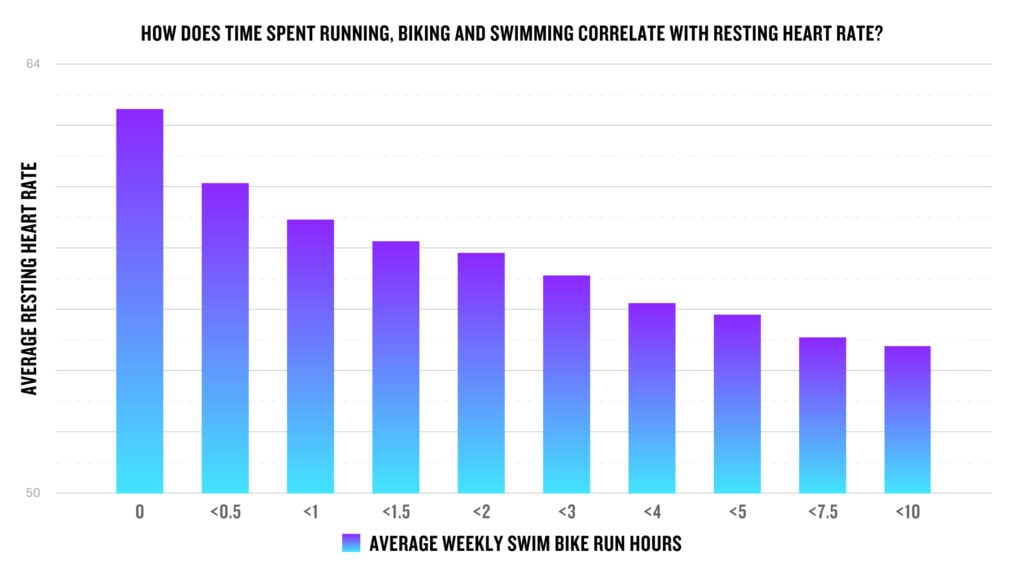
It’s not shocking that regular, vigorous cardiovascular exercise can be good for you. Garmin users love to run, bike, swim and more — all activities that provide an abundance of health benefits. Because of the popularity of these activities and the enormous value added to your heart health specifically by performing cardio, we decided to look at the number of cumulative hours per week spent running, biking and swimming as they correlated to the user’s average resting heart rate. Here are the results: Up to 10 hours, the more time a user spent doing these activities, the lower their average resting heart rate measured.
Total activity hours and resting heart rate
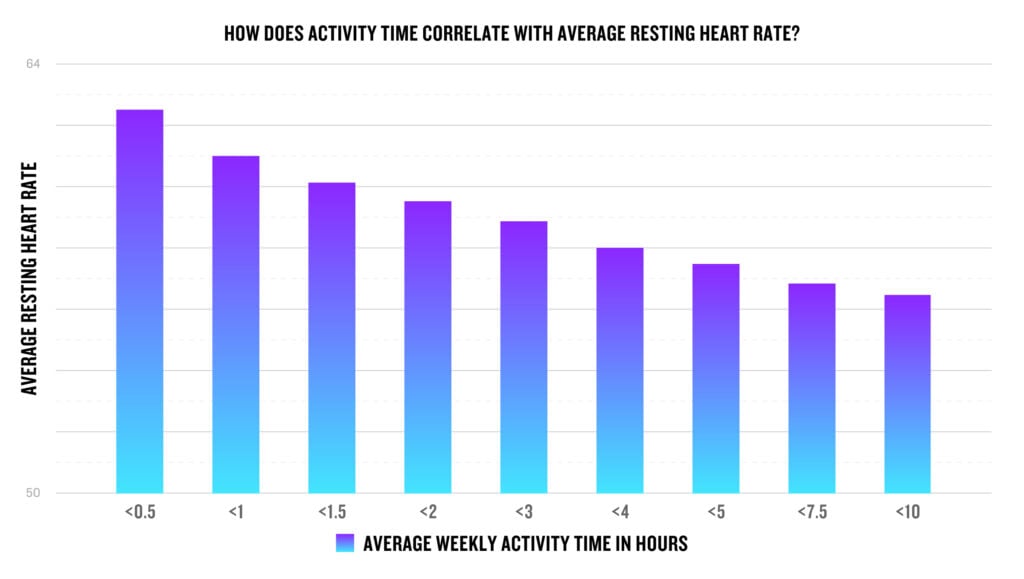
But what about people who like to perform activities outside of (or in addition to) running, swimming and biking? Don’t worry — we looked at those too. No matter which activity is your go-to with your Garmin smartwatch — from kayaking to yoga, golfing to strength training — we still noticed a correlation. Typically, the more time you spend being active, the lower your resting heart rate should be.
Daily step count and resting heart rate
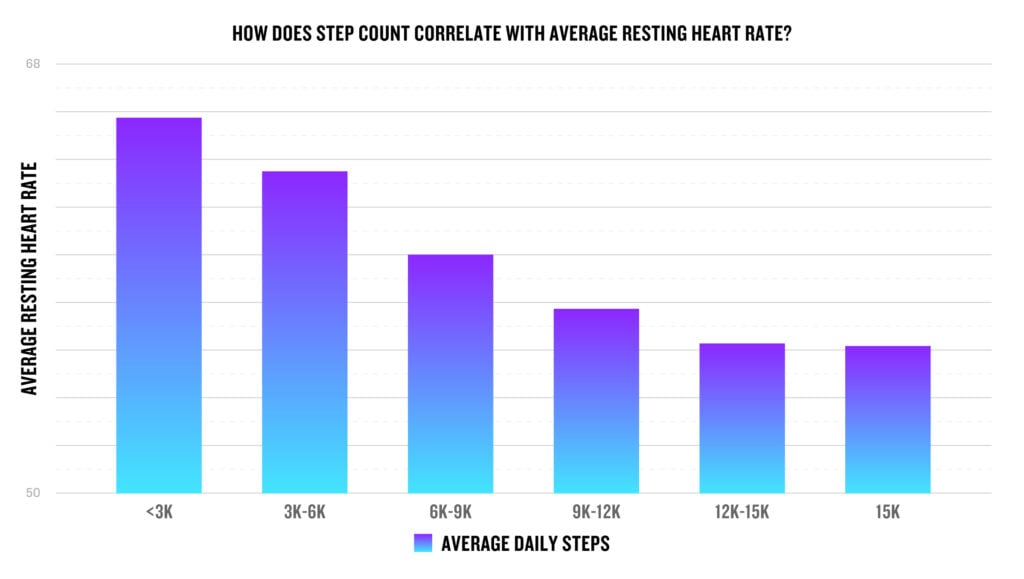
Are you a fanatic about meeting your daily step goal? Or do you prefer to silence your move alerts throughout the day? You might want to look at the data below if you aren’t putting up decent daily step counts on average. Generally, the more steps you can get per day, the stronger your heart is. Consider this a reminder to take that lap around the office — it may be more beneficial than you thought.
Resting heart rate across age groups
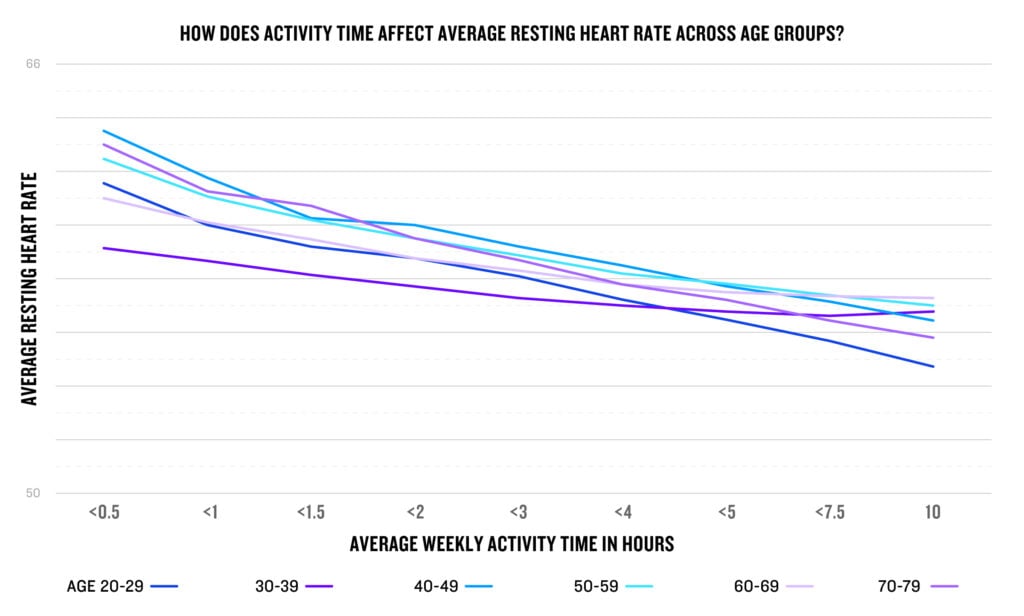
In our 2025 Garmin Connect data report, we found that different generations preferred different activities (such as outdoor running for 18- to 29-year-olds or golfing for those over age 70). As you age, that activity remains key. But no matter the activity, staying active — at all ages — may lead to a lower resting heart rate.
How can I improve my average resting heart rate?
The answer here could be simple: Get moving! The above charts show that, typically, for the average healthy adult, a more active lifestyle leads to a healthier heart. If you haven’t found an activity you’re passionate about yet, that’s OK. Garmin smartwatches offer more than 100 built-in activity apps to try, whether you’re seeking out that one hobby that’s going…