
Garmin LiveScope Helps Angler Discover Sunken Ships
July 15, 2025
Shipwreck hunter Chris Thuss is currently exploring multiple underwater sites on Lake Michigan. Here is how it all began.
Spending afternoons fishing for smallmouth bass on Lake Michigan and off of Manitowoc, Wisconsin, is a routine part of Chris’ week. So, it’s not uncommon for him to reel in a couple smallies or stumble upon a few known shipwrecks in the process.
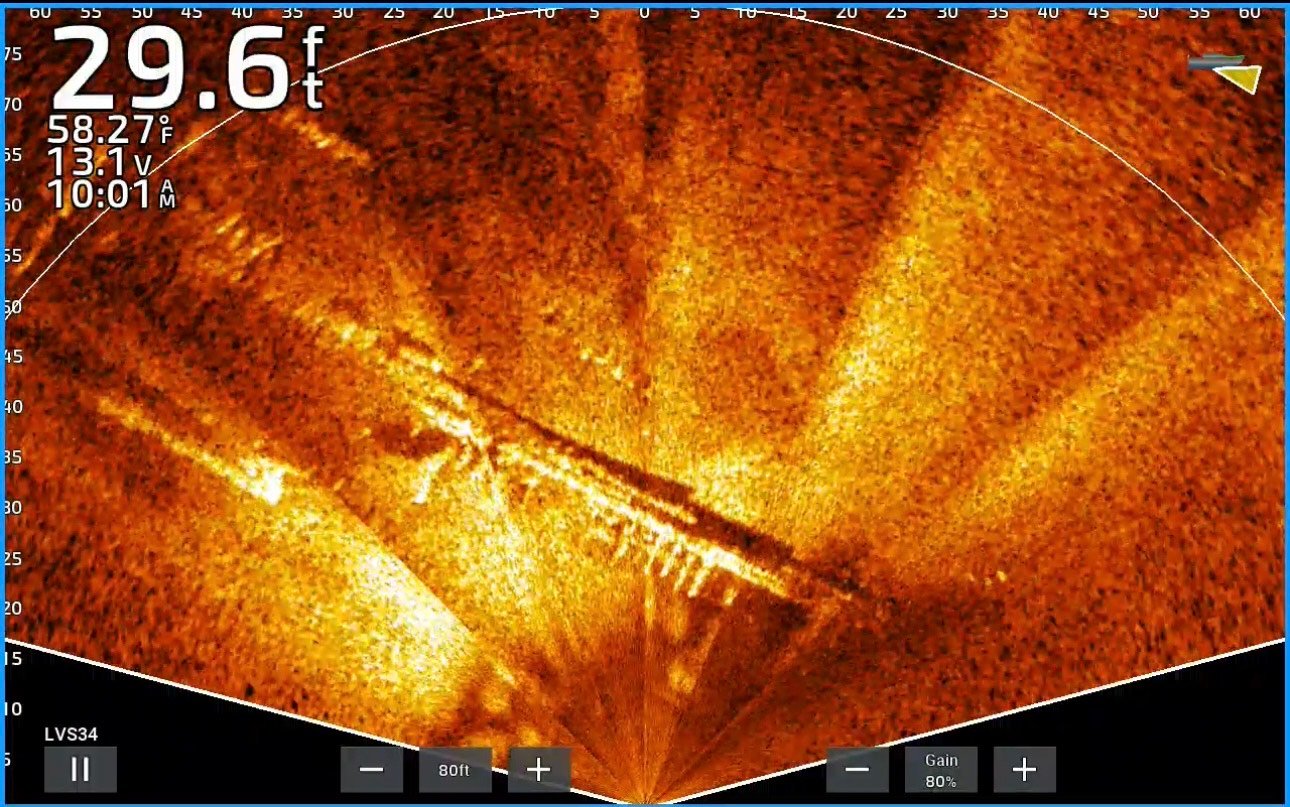
But on the afternoon of May 13, 2025, Chris noticed something 9’ beneath the current appear on his Garmin LiveScope™ sonar. It was a 100-year-old piece of history called the J.C. Ames.
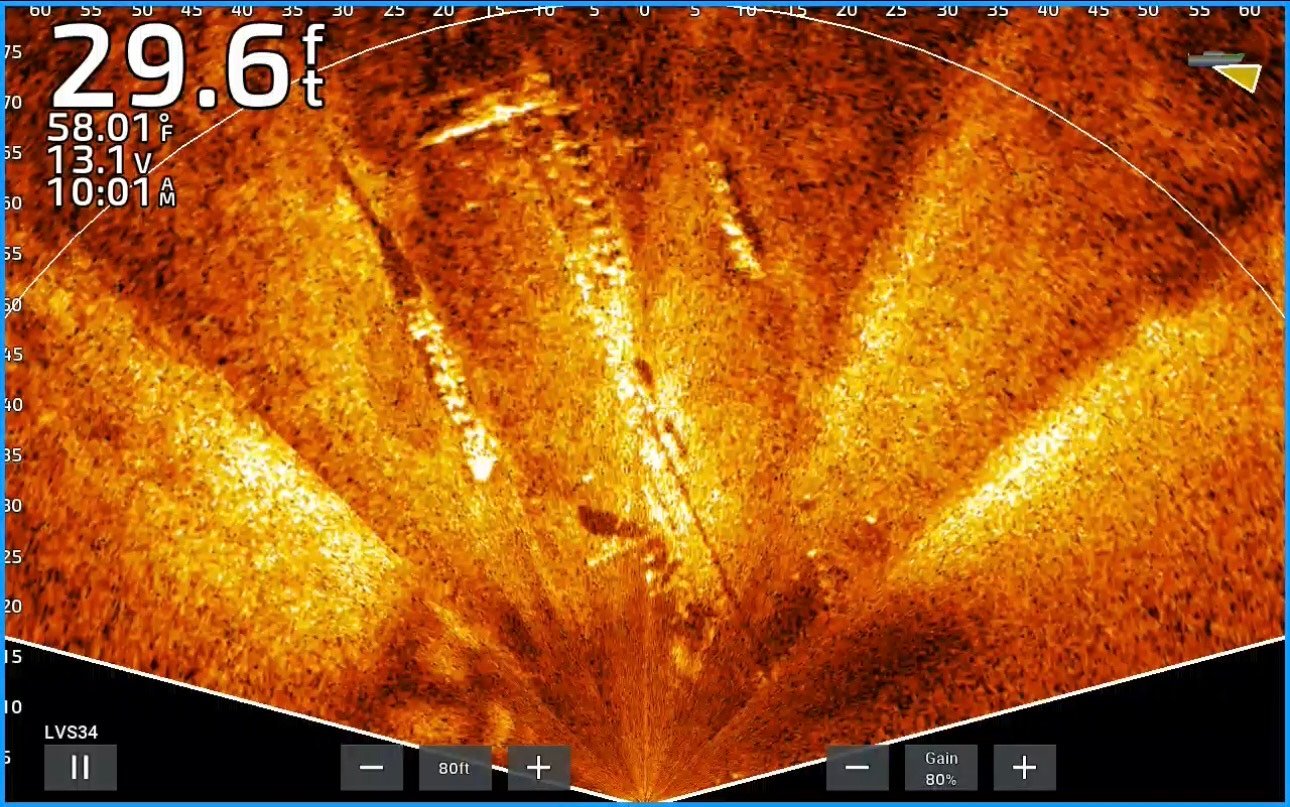
“It was so foggy, I was just following the bank, and I noticed what looked like either a board or a couple pieces of wood on my LiveScope,” Chris said. “So, I kind of just angled my boat out to the right and as soon as I went over to that area, I saw the whole ribbing and everything of the ship.”
Built in 1881, the J.C. Ames was originally named the J.C. Perrett. It was one of the biggest tugboats built on the Great Lakes at 160’ and was used to haul large amounts of lumber to port.
After approximately 50 years of service and at the height of the Great Depression, the J.C. Ames was scuttled, thrown into Maritime Bay and set on fire for onlookers to witness.
Until now, the ship had yet to be documented.
Chris credits his LiveScope™ LVS32 sonar1 with finding the wreckage, although he initially purchased it to find fish, not shipwrecks.
“If you want to be in the game, tournament-wise, you pretty much have to have some sort of forward-facing sonar on the boat at this point,” Chris said.
When Chris was following the bank, he was running LiveScope LVS32 in forward mode. He typically only uses it in this mode since he doesn’t have a perspective mount. To see what’s happening below him, he has Garmin GPSMAP® 1222.
Once Chris identified the wreck, he got in contact with a diver from the Wisconsin Historical Society. Without being in the water and seeing it with his own eyes, Chris was able to identify key features of the boat and pass them along to the diver, who then was able to dig through records to figure out what shipwreck this must have been. Records can include ship logs, journals, wreck lists, newspapers, etc.
“I could give her an estimated length and an estimated width of the vessel just going back and forth on LiveScope and varying my forward range,” Chris said.
When taking a closer look, Chris was also able to identify what type of boat the J.C. Ames was.
“There’s a handful of steamers that they had sunk in the area. So, a steamer had a side wheel on it, there was no propeller,” Chris said. “This boat, I could actually see the propeller on my LiveScope, so that kind of eliminated a couple of the potential boats that could have been in the area.”
Just by taking a look at the size of the propeller, it was clear that the boat was a tugboat.
While Chris lives on the water, he admits he’s not much of swimmer, so being able to view the J.C. Ames with LiveScope allowed him an in-depth, 3D look at the details of the tugboat without ever having to go beneath the current.
“To be able to look at everything in detail from topside on the front deck of my bass boat was pretty cool,” he said.
Once a shipwreck has been covered with sand, the extra layer helps to preserve the wreck by acting as a physical barrier and slows the process of decomposition. So, when the water levels are low and more pressure is put on the sand, waves become more intense and start to wash the sand out of wreckages, leaving the ship perfectly preserved and easy to view.
“It’s kind of like a time capsule,” Chris said.
Finding shipwrecks is way for historians and anglers to, as Chris puts it, “unveil a piece of history.” And luckily, a Garmin LiveScope sonar allows the legacy and intrigue of sunken vessels to live on.
1Garmin provided Chris with the LiveScope Plus LVS34 sonar that he used to take the photos in this story