
16-year-old Coordinates Rescue for Dad After Fall | Garmin
September 26, 2025
One fateful day, Bonnie Larson received a call from the Garmin Response℠ team that her husband had taken a severe fall, and her 16-year-old son had triggered an SOS on their inReach® satellite communication device1. She shared with Garmin what ensued that day.
My husband Eric and son Henry were on a backpacking trip into the Wind River Range in Wyoming. The plan was to climb Gannett Peak from Glacier Trail on the east side of the range, which was going to be about 50 miles round trip.
The first night was spent at Star Lake — 11 miles in — and on the second day they hiked another 12.5 miles to the end of Glacier Trail. On day 3, a Monday, they left camp and set out for the summit.
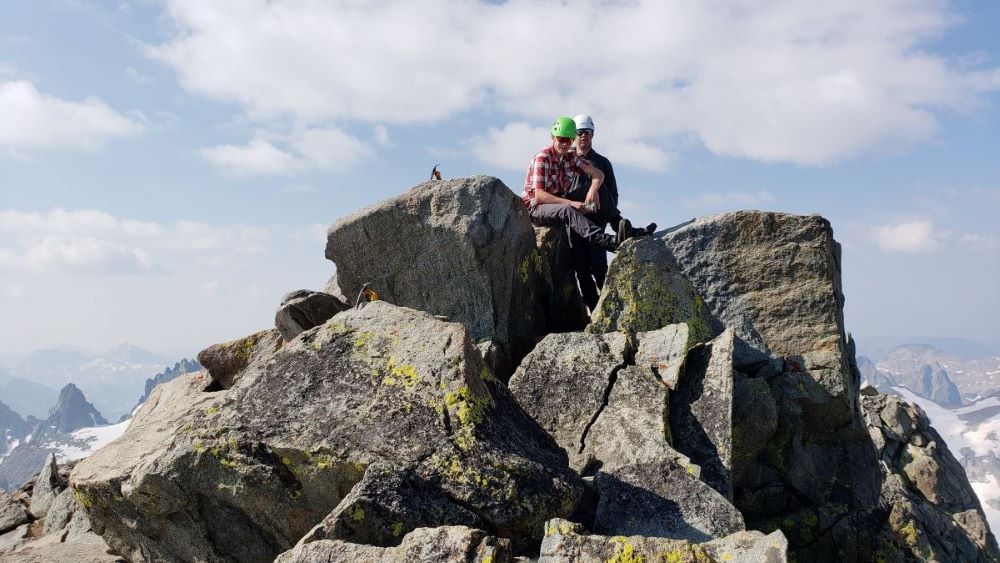
They departed camp at 6 a.m., reached the summit at 10:30 a.m. and were there for about a half hour before starting their descent. Eric warned Henry that the most dangerous part of the climb was the descent, and they discussed safety practices.
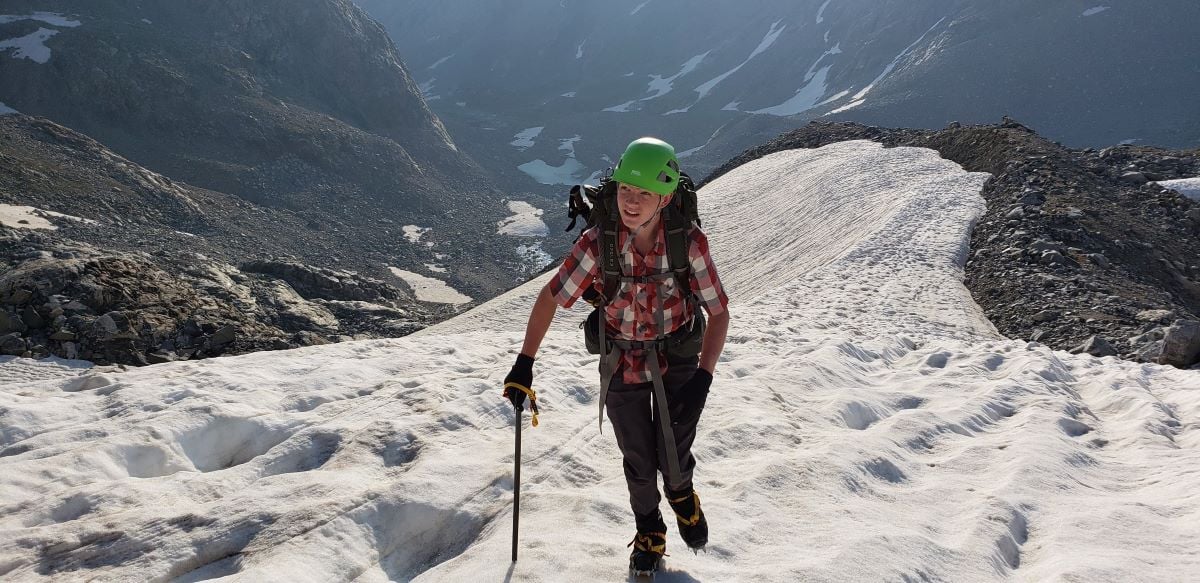
Eric was leading the way and had just gotten off the crux — the hardest part — but the snowpack had changed since the morning climb up, and it was very soft. He doesn’t recall if his crampons or ice axe lost grip, but the next thing he knew he was sliding down the mountain trying to get the pick on the ice axe to arrest his fall.
Henry was just above him, still on the crux, and watched as Eric slid 20’, then free fell another 10’ off the face of the bergschrund — a crevasse that forms when moving glacier ice separates from the stagnant ice. Eric landed on his back, was knocked unconscious, slid into the crevasse and fell down another 30’.
Henry had to keep his head while he finished down-climbing and worked his way over to where Eric fell into the crevasse. When he got there, he looked in and could not see Eric. He took his pack off to climb in and began yelling for his dad over and over.
Eric awoke on his back and could hear Henry calling for him. He was wearing his full-size pack, which had extra supplies and clothes as well as his trekking poles secured to the outside. Eric thinks the pack probably softened the fall and the poles lent extra support and rigidity, preventing him from sustaining worse injuries.
Immediately his dad-mode kicked in, and he yelled back, “I’m OK!” He then looked around, saw sunlight and began working on getting out. There were ice bridges that were blocking the way, which he broke down in order to climb out. He doesn’t remember any additional details.
When Eric managed to get out, Henry became worried because his dad couldn’t recall why they were there and wasn’t sure where they were. Eric was also feeling extreme pain in his back and having difficulty breathing. He instructed Henry to activate the SOS on their inReach satellite communicator.
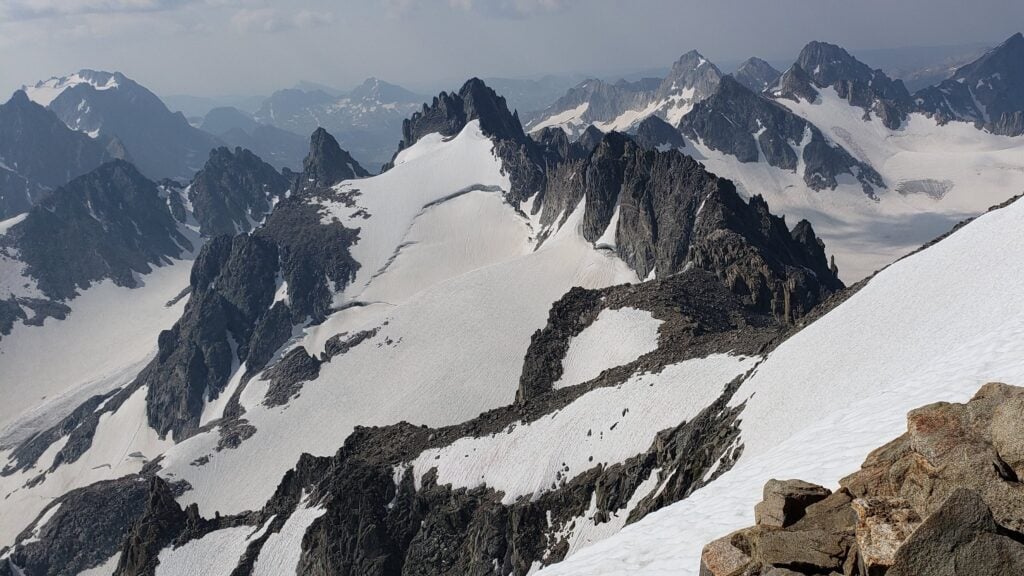
Knowing they would not be able to get rescued from their location due to the steepness of the slope, they headed down the glacier. Henry helped his dad walk and handled the inReach communications with Garmin Response℠ and the search and rescue (SAR) team.
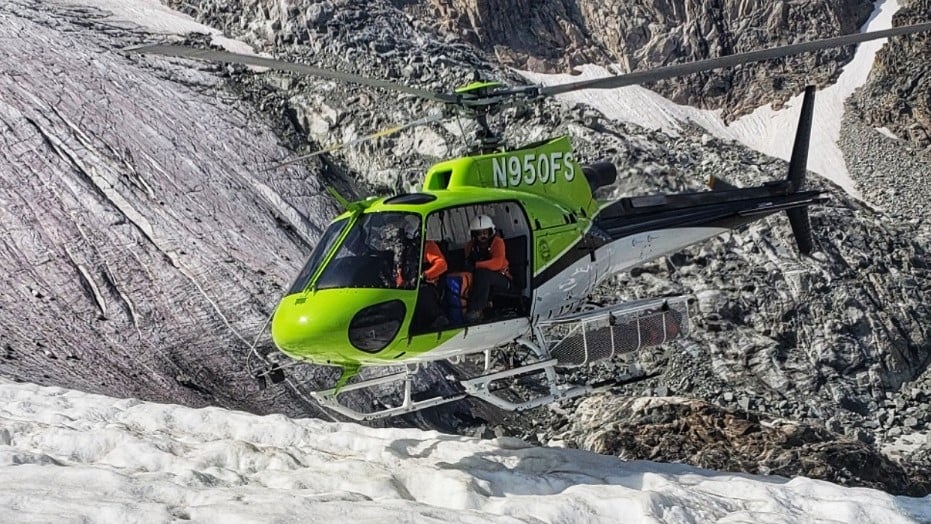
The first helicopter arrived around 1 p.m., but couldn’t land because of the terrain. The head of the SAR team called me and said they would not be able to pick them up just yet. They were going to dispatch another helicopter with a hoist.
Eric spotted a flat spot just down the ridge that he thought would be easier for a helicopter to land and retrieve them. As they moved, Henry used the inReach to update everyone on Eric’s status, including advising us that Eric had broken bones.
The SAR team dispatched a scouting helicopter to assess the situation, but the team in the helicopter was having a hard time spotting them. Henry pulled out his orange puffy jacket and put it on while waving his shiny emergency blanket. They were spotted on the ridge and another helicopter with a hoist was dispatched to retrieve them.
At this point, it was getting late, and Eric was concerned that a rescue might not be possible that day. He evaluated whether a bivvy shelter might be feasible in their present location. Or, alternatively, attempting a climb down to base camp, which was 2 miles away.
Eric did not feel that getting to base camp was possible because of a large boulder field between them and camp that would be impossible to navigate in his condition. Another hour and a half passed before the next helicopter arrived, dropping off two SAR members because they still couldn’t land.
After a medical assessment, the decision was made to short line them off the mountain. Eric and a SAR attendant were flown down first to the waiting medical evacuation helicopter. The helicopter returned to retrieve Henry and took him to another SAR team member who drove him to where our friend could pick him up.
I met Eric at the trauma 1 medical center at 8:30 p.m., and Henry was home by midnight. Eric was released…