
82-year-old uses inReach to track trek to Mt. Everest base camp
November 14, 2025
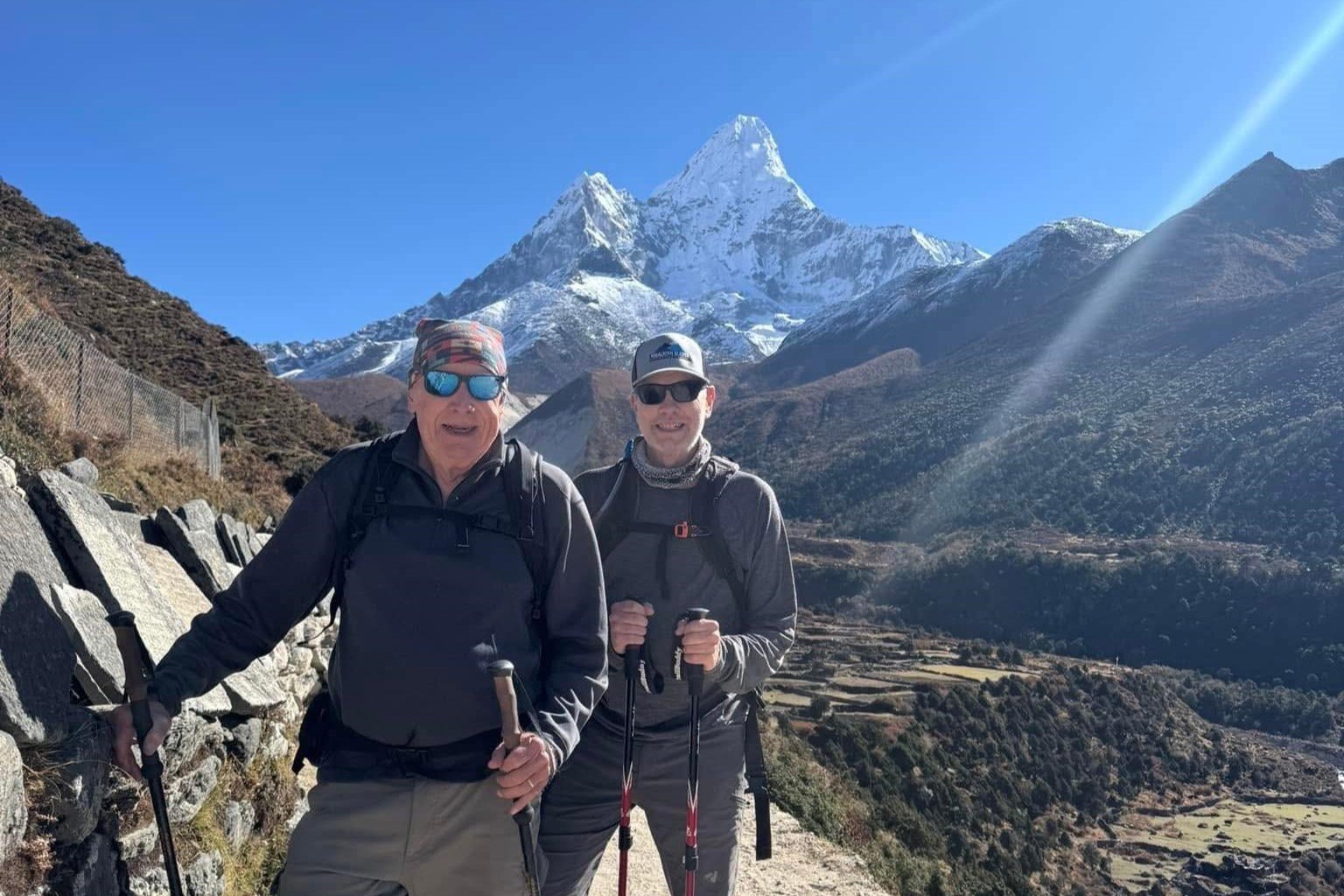
Dave McClung has set an unofficial record as the oldest individual to hike to the South Base Camp of Mount Everest at 82 years old, and he used his Garmin inReach® satellite communication device1 to track the journey. He shared his story — from buying the first inReach device model to taking his inReach Mini 2 to the base camp of the world’s tallest mountain.
Dave McClung of Olathe, Kansas, has achieved a lot in his life. He’s a businessman, attorney, educator, veteran and adventurer. And at 82 years old, he’s certainly not done pursuing new goals.
Most recently, Dave — who has hiked on every continent — set an unofficial record as the oldest individual to hike to the South Base Camp of Mount Everest. His family has applied to have the trek registered with the Guinness Book of World Records.
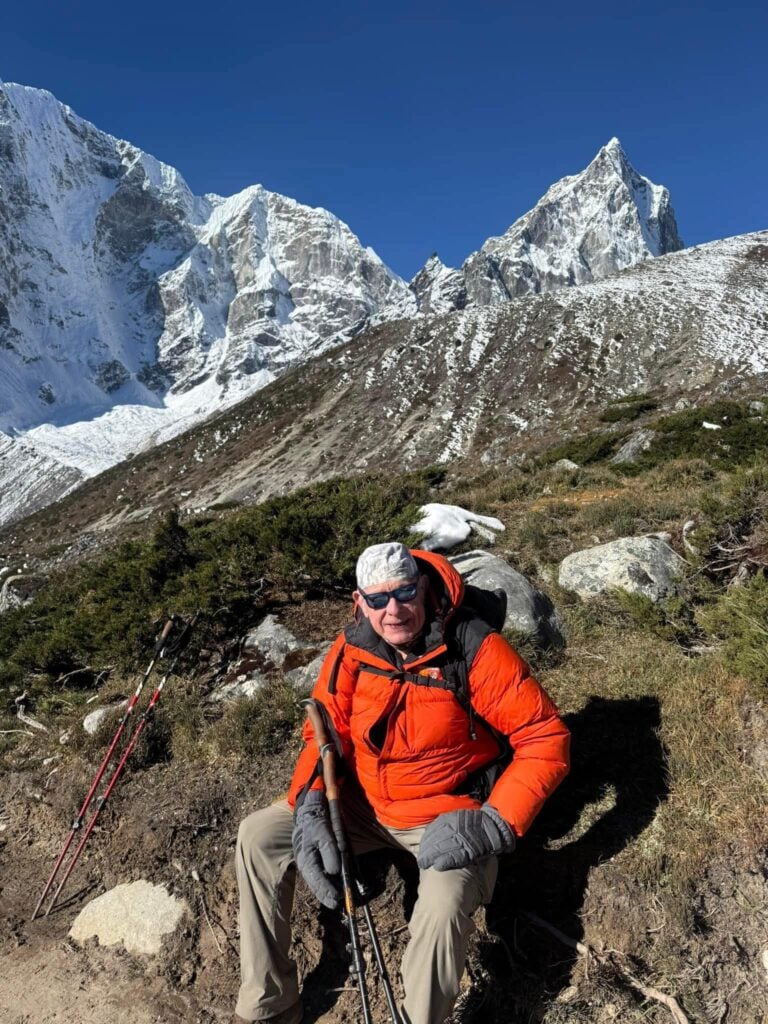
For Dave, the idea came about organically. His son, Dennis, 55, makes frequent trips to Asia for work, and they had been discussing the possibility of doing a hiking trip together in Asia. That’s when the idea of completing the trek to Everest Base Camp came up, and that’s what they settled on.
“At the time we planned the trip, we did not know that I would be the oldest person to complete the trek,” Dave said.
The hike to Everest Base Camp (17,598’ elevation) is no small feat — requiring proper planning, physical fitness and acclimatization. Trekkers must navigate rugged terrain, unpredictable weather and the risk of altitude sickness.
Guides led Dave and his son each day, limiting their daily ascent to mitigate altitude illness in the rarefied air. They had each spent many months training for the approximately 80-mile round-trip trek, which requires roughly 6 to 8 hours of walking per day. But due to the thin air and difficult terrain, Dave reported he couldn’t ever recall being more exhausted.
Still, after 8 days, the 82-year-old ultimately achieved his ambitions of making it to the base camp of the world’s tallest mountain.
Early adopter of inReach
A complexity of completing the Everest Base Camp trek is planning and acquiring all the necessary gear for up to 2 weeks of foot travel and camping at altitude in variable weather.
One thing Dave was sure to pack was an inReach device — technology he’s used on adventures since 2013.
“I was an ‘early adopter,’” Dave said. “The first inReach was sold in November 2011. I bought that first model in February 2013 and have upgraded from time to time. Since 2013, I have left tracking points all over the world.”
He bought his first inReach device after a member of his party collapsed and needed medical attention while on a hike in the Grand Canyon, and he has since used inReach devices in 2 emergency situations.
“I learned the importance of having a device that has two-way communication,” he said.
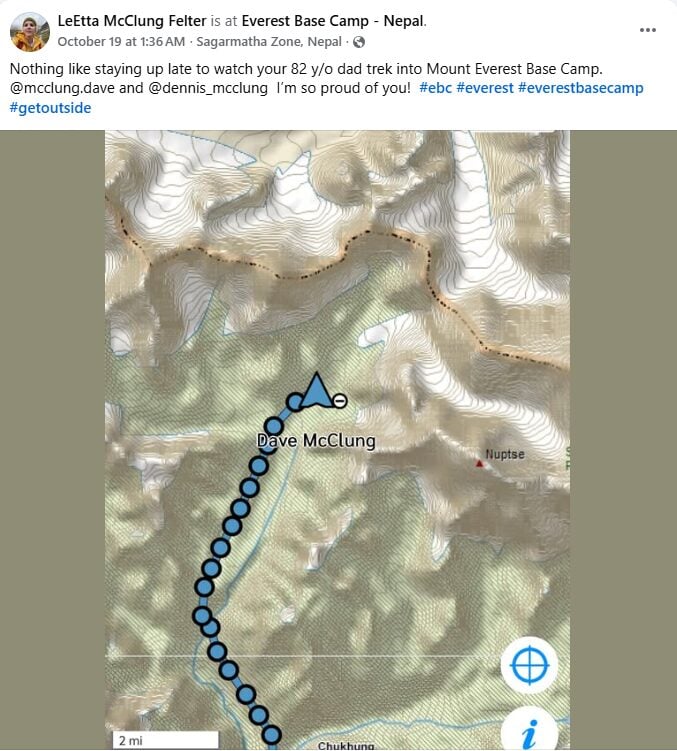
For his most recent expedition, Dave used an inReach Mini 2 to document every step of the way on his personal MapShare™ page with real-time updates so his loved ones could follow along.
“I left tracking points at each stop along the way,” he said. “Seattle, Doha and Kathmandu. Once I reached Nepal, I set it to leave a tracking point every 10 minutes and left it on until the end of the trek.”
The result was a map detailing their entire trek, as well as the peace of mind that comes with having SOS and two-way communication outside of cellular service.
“For anyone who goes where cellphone coverage isn’t reliable, having an inReach provides a safety net,” he said.
Dave has now accumulated an impressive adventure list — his “done that” list — that tops over 1,125 things he can now say “done that.” It spans things from notable foods he’s tried (Peking duck in Peking) to local markets he’s visited (the farmers market in Funchal, Portugal) and animals he’s crossed paths with (a black mamba snake in Africa).
Now, he’ll be able to add “hiked to Everest Base Camp at 82 years old.” And there’s still more to come.
1Active subscription required. Some jurisdictions regulate or prohibit the use of satellite communication devices. It is the responsibility of the user to know and follow all applicable laws in the jurisdictions where the device is intended to be used.